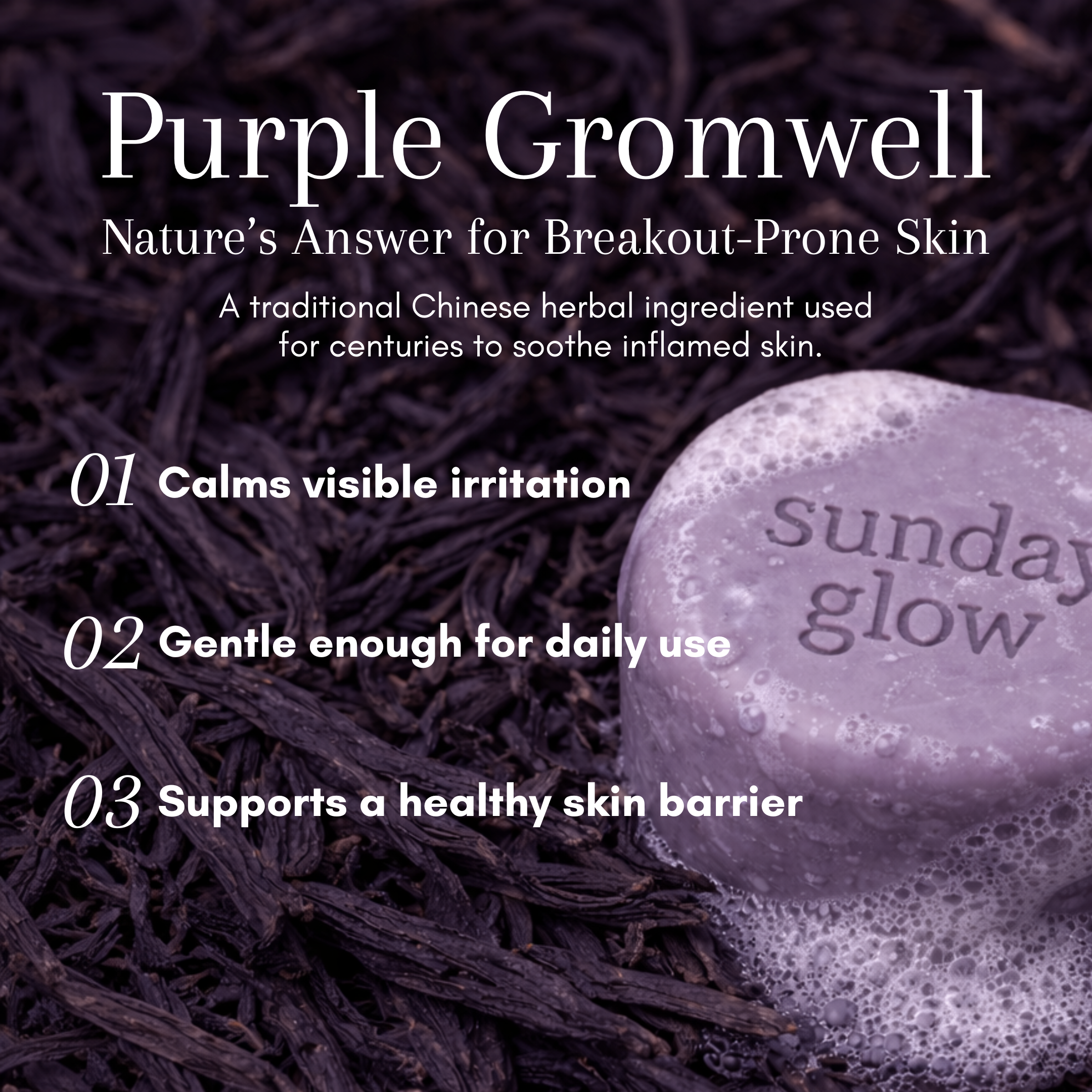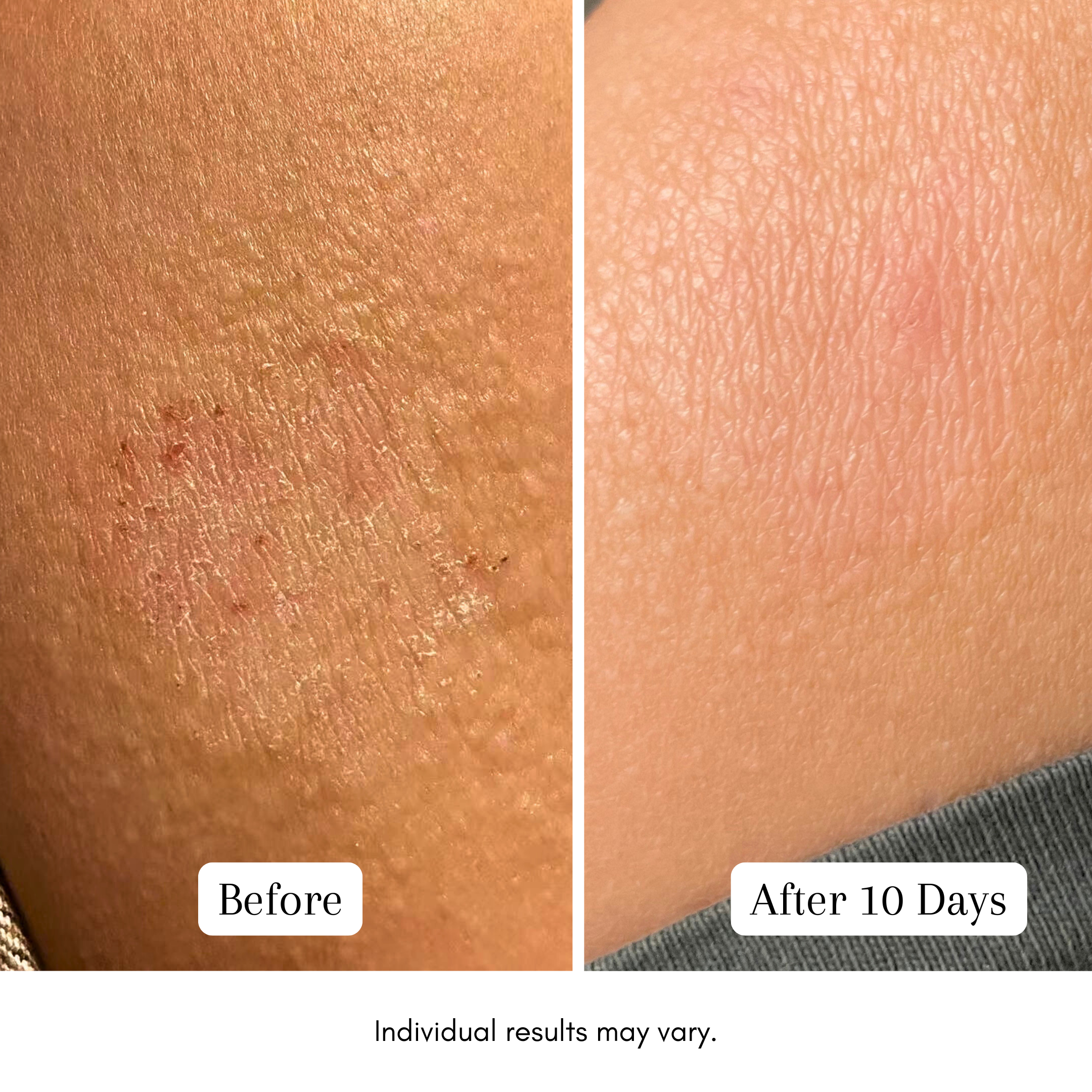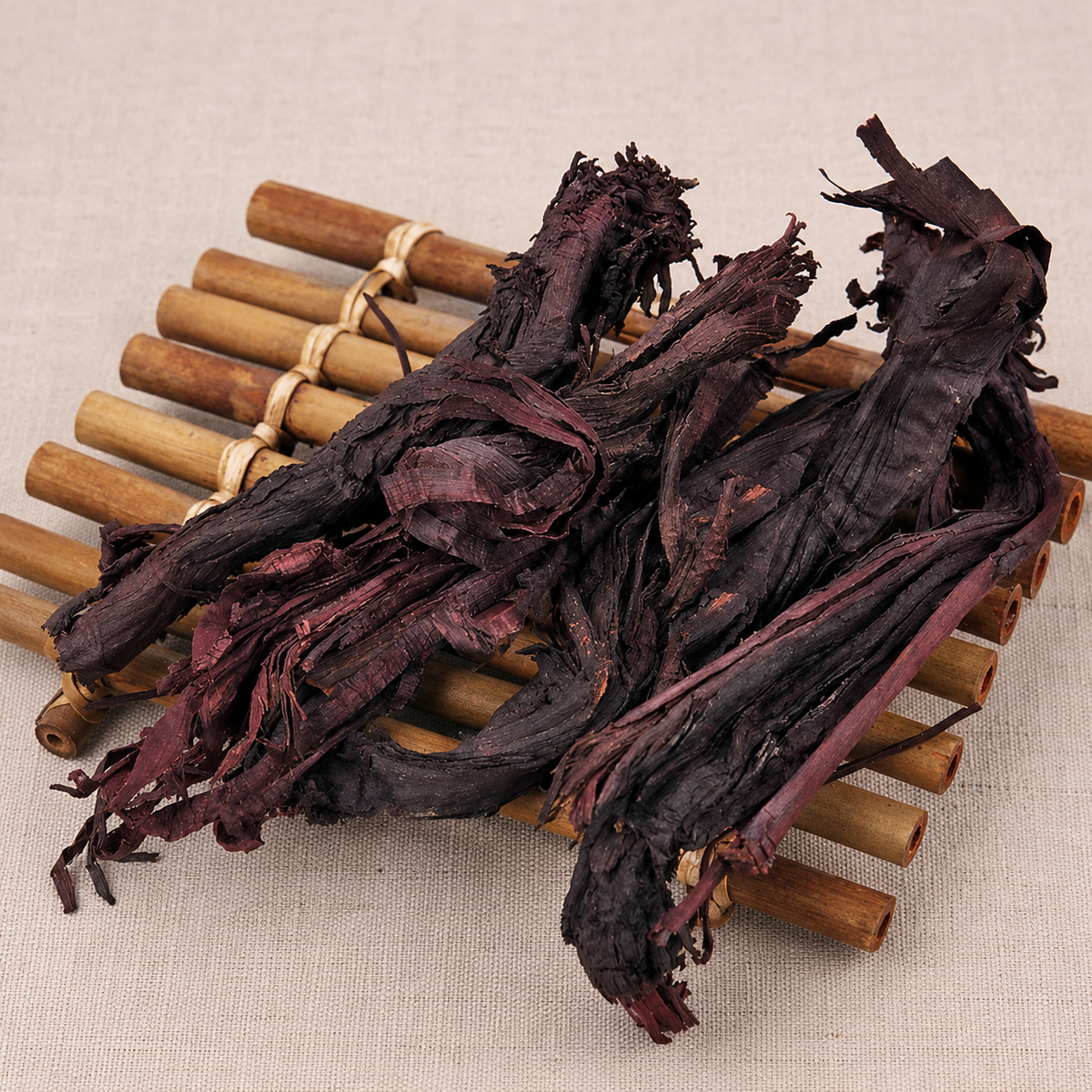
The first thing most people notice about purple gromwell is the color. The root is dark, earthy, and almost ordinary on the outside. Once infused into oil, it releases a rich red purple pigment that makes every batch look slightly different. It is the color behind our bestselling cleansing bar, but it is also much more than a pretty botanical.
Known as Zi Cao in Traditional Chinese Medicine, purple gromwell root has a long history of topical use. Today, it is beginning to appear in modern skin care, often under its botanical name, Lithospermum erythrorhizon. Here is what the ingredient is, what research can and cannot tell us, and why it became the heart of Sunday Glow.
What is purple gromwell root?
Purple gromwell is a flowering plant native to parts of East Asia. The part traditionally used is the root. On a cosmetic ingredient list, you may see it written as Lithospermum erythrorhizon root extract. In Chinese, it is commonly called Zi Cao. The root contains naturally occurring compounds called naphthoquinones. One of the best known is shikonin, which also contributes to its distinctive color.
Purple gromwell has been used in traditional topical preparations for generations. Modern laboratory research has explored shikonin and related compounds, but that does not mean every finished cosmetic containing the root will produce the same result. The concentration, extraction method, formula, and whether the product is rinsed off or left on all matter.
That distinction is important. An ingredient can have an interesting research story without turning a cosmetic into a medical treatment.
Purple gromwell in Traditional Chinese Medicine
Traditional Chinese Medicine is a herbal system developed over thousands of years. Ingredients are understood not only by themselves, but also by how they are prepared, combined, and used. Zi Cao has a long association with topical herbal care. It has traditionally appeared in infused oils, salves, and ointment style preparations.
At Sunday Glow, we respect that history without pretending an old use is automatically modern clinical proof. Traditional knowledge explains why an ingredient has remained meaningful across generations. Modern research helps us ask better questions about its compounds and cosmetic potential. Neither should be exaggerated. Our approach is to keep the ingredient connected to its origin while translating it into skin care that feels understandable and useful today.
What does research say about purple gromwell?
Research has focused largely on shikonin and related compounds found in the root. Scientific reviews have examined their antioxidant and soothing activity in laboratory and preclinical settings. That research is promising, but it has limits. Many studies investigate isolated compounds rather than a complete cosmetic formula. Some are performed in cells or animals rather than in large human trials. A cleansing bar that stays on the face briefly is also different from a concentrated leave on balm. For a customer, the finished formula matters more than a dramatic ingredient headline.

Why we use purple gromwell in skin care
It fits skin that wants gentleness and purpose
Many people with breakout prone skin feel stuck between products that are too aggressive and products that feel too basic to make a difference. Purple gromwell gave us a different starting point. It allowed us to build a cleansing ritual around a meaningful botanical while still focusing on the details that determine the experience, including the oils, clays, lather, and how the skin feels after rinsing.
It works naturally with oil infusions
Purple gromwell root releases its color and oil soluble compounds into an oil infusion. That makes it especially suited to the way Mama Glow works with traditional botanical preparations. For the Purple Gromwell Clarifying Cleansing Bar, the root is infused into olive oil before becoming part of the full formula.
It gives every batch character
Botanical ingredients do not always produce a perfectly identical color. One batch may look deeper or warmer than another. We see that variation as part of working with the whole root. It is a reminder that the color comes from a real plant and a handmade process.
It connects our formulas to our family
Purple gromwell was not chosen because it became a trend online. It came from the herbal skin care knowledge passed through Celine’s family. Mama Glow is a second generation skin care artisan trained in Traditional Chinese Medicine practices. She prepares every cleansing bar in Toronto using the family methods she learned before Sunday Glow existed. The ingredient connects the product to a real person, process, and history.
Purple gromwell cleansing bar vs balm
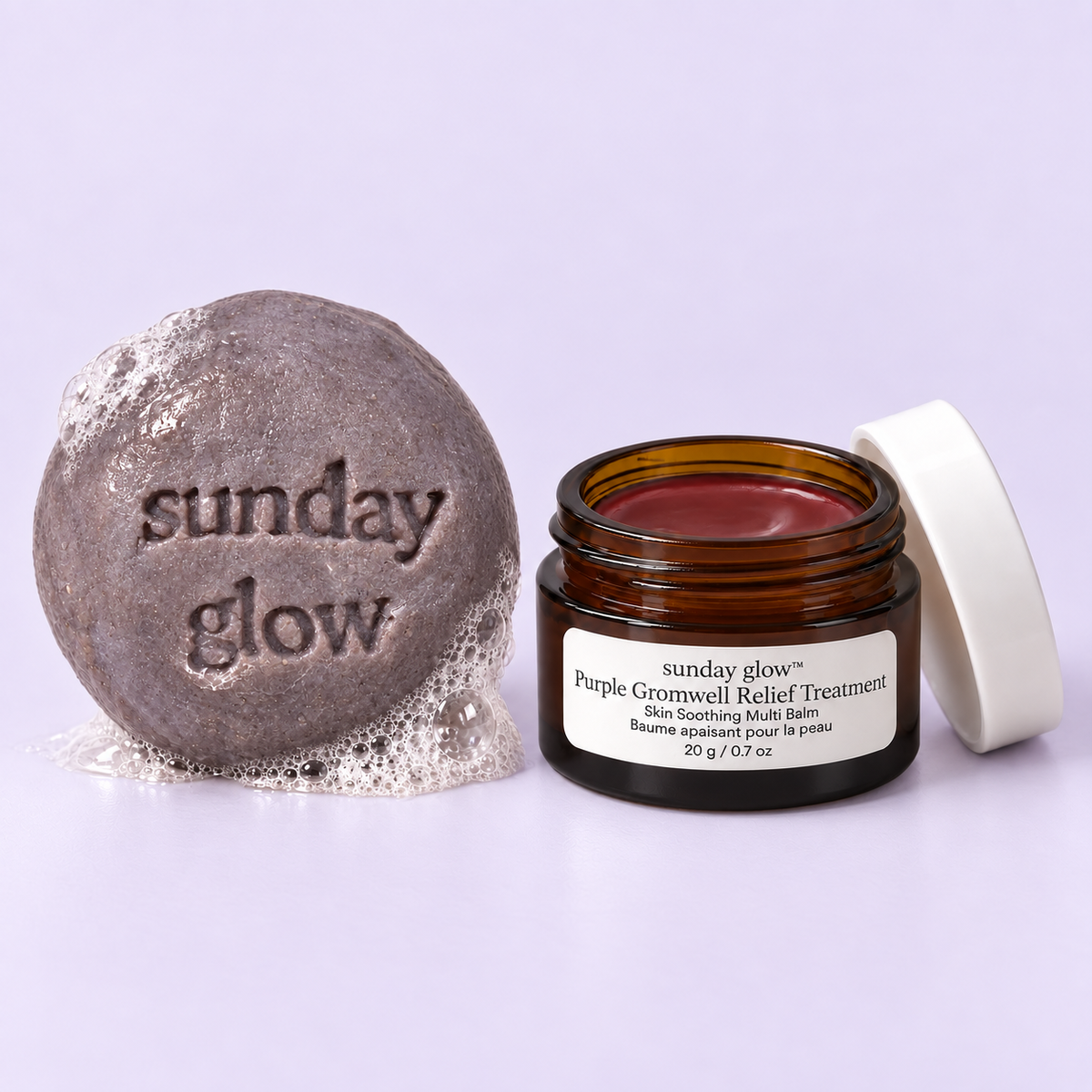
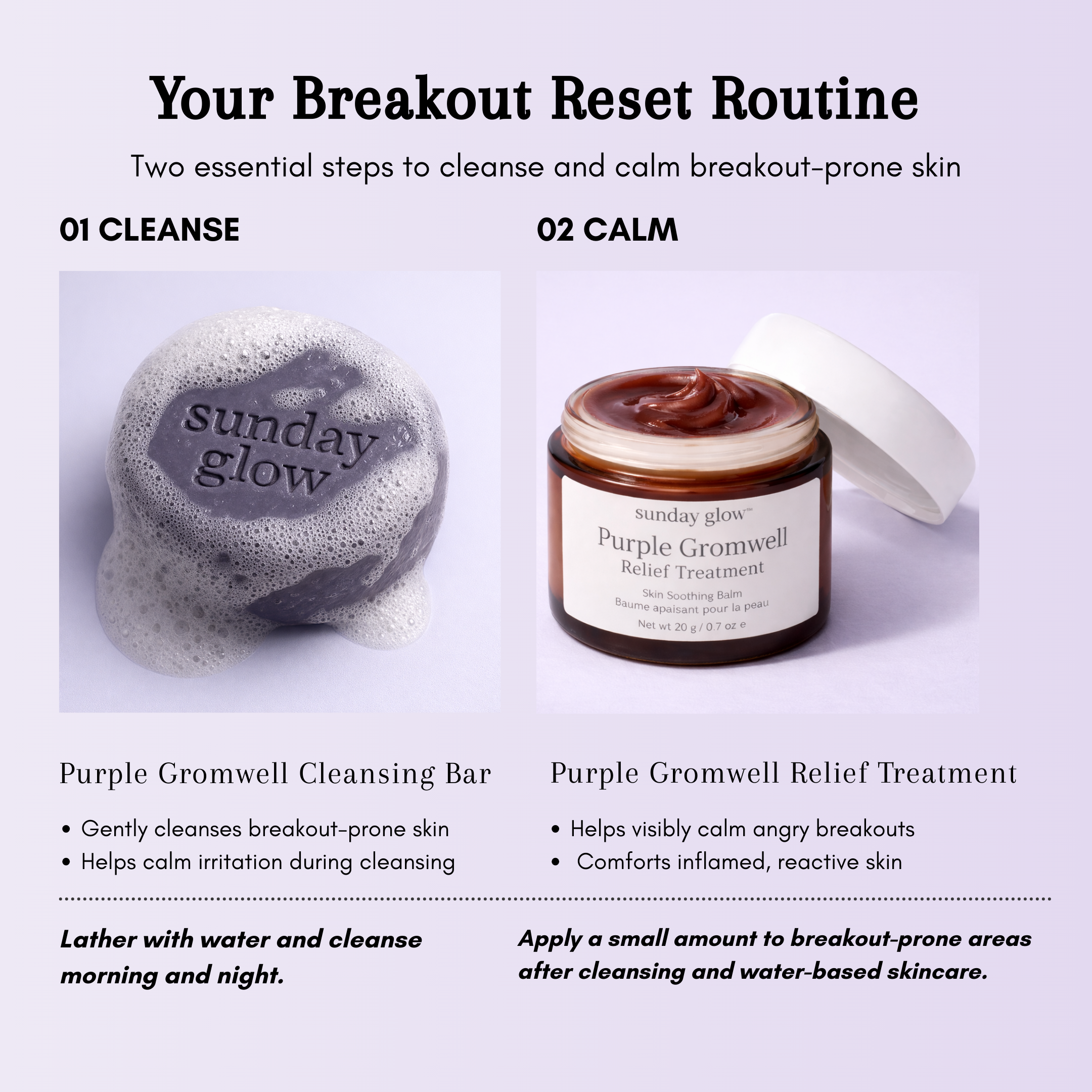
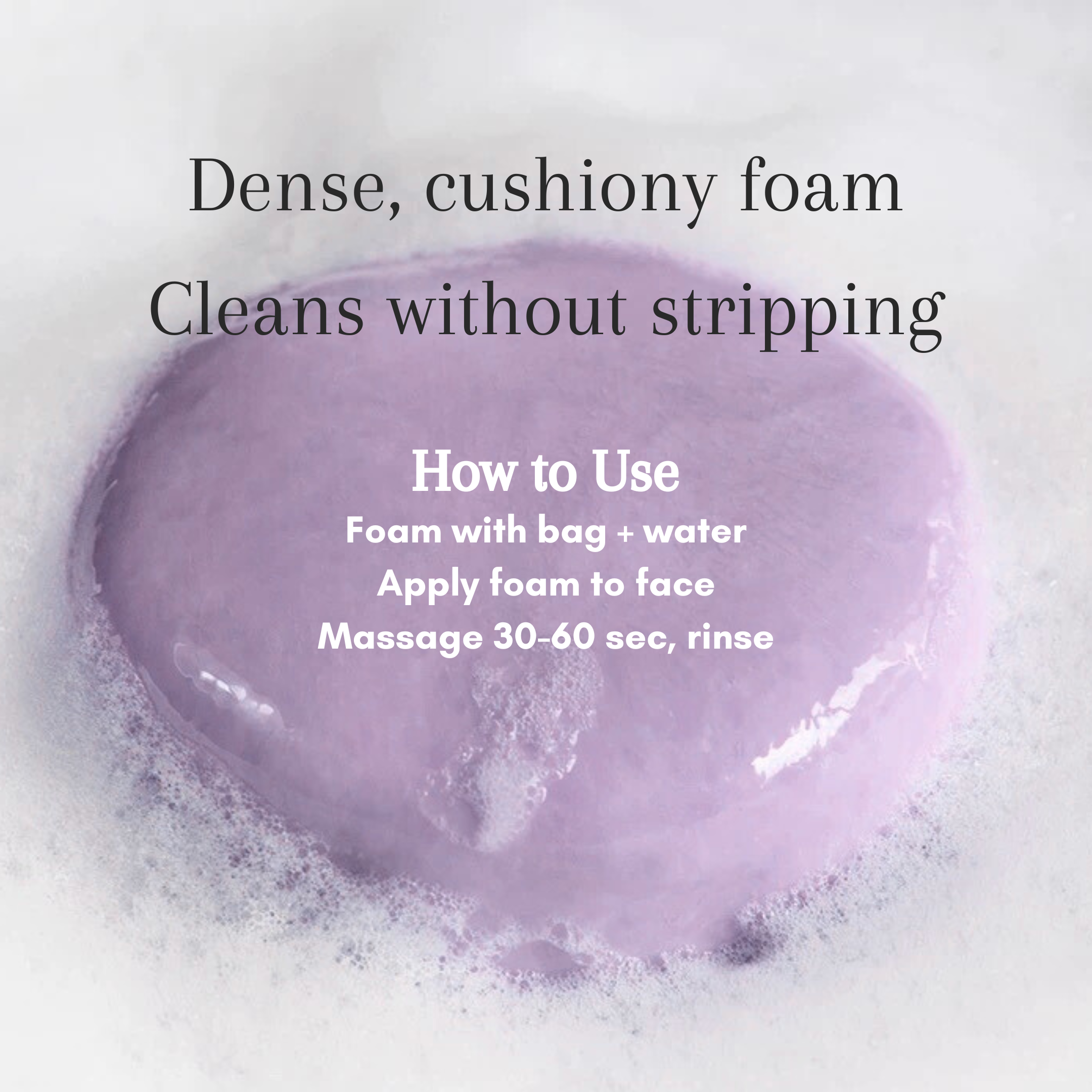
The same hero ingredient can play a different role depending on the format. The Purple Gromwell Clarifying Cleansing Bar is a rinse off product. It is designed to remove daily buildup and create a thorough cleanse without leaving skin feeling stripped.
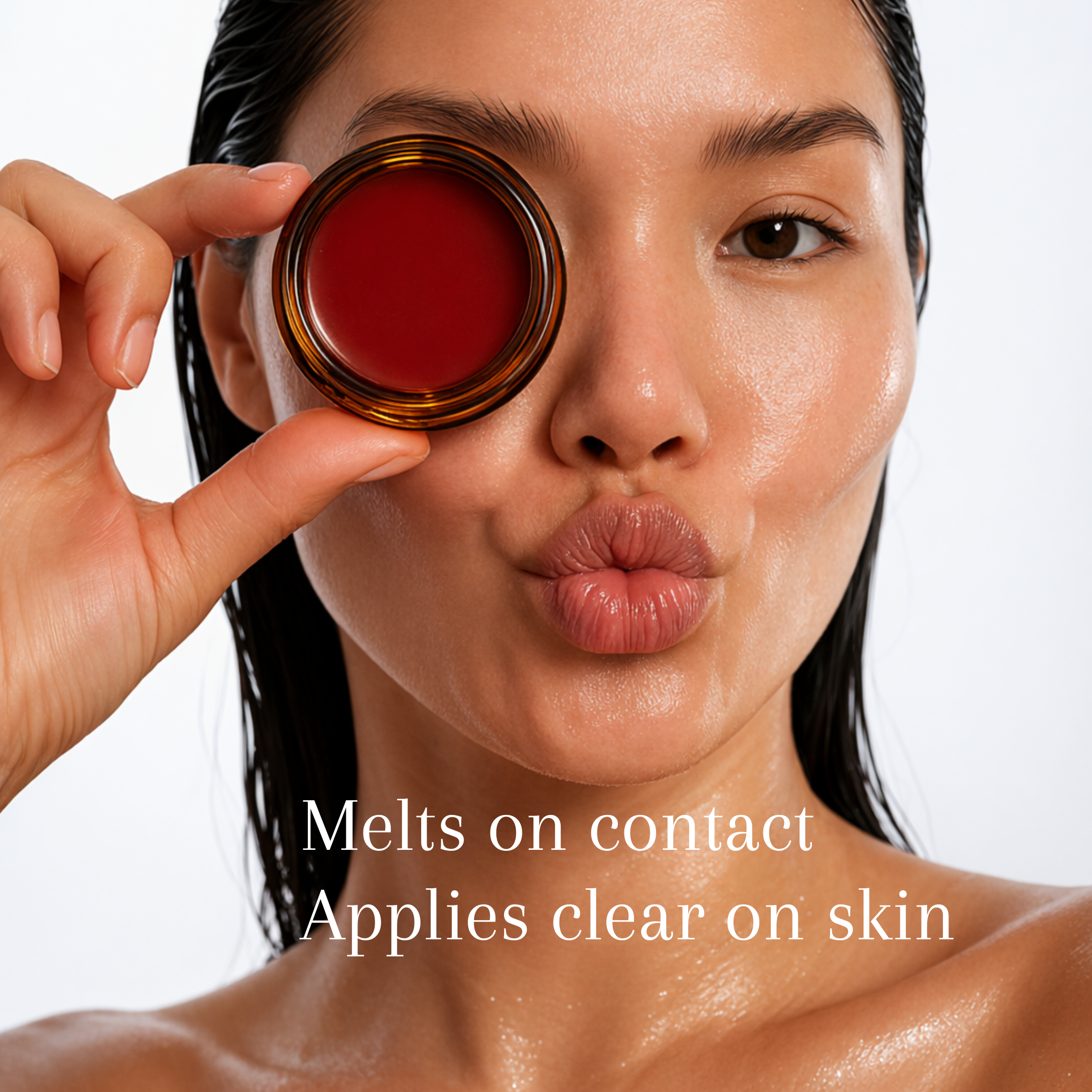
The Purple Gromwell Relief Treatment is a concentrated leave on balm. It is designed for dry patches and areas that need extra comfort and moisture.
One is the daily foundation. The other is targeted support.
Shop Purple Gromwell Clarifying Cleansing Bar
Shop Purple Gromwell Relief Treatment
Frequently asked questions
Is purple gromwell the same as Zi Cao?
Zi Cao is the Chinese name commonly used for purple gromwell root. Botanical sourcing can vary, so the ingredient list is the best place to confirm the exact plant used in a formula.
What is the botanical name for purple gromwell?
The botanical name used in Sunday Glow formulas is Lithospermum erythrorhizon. On an ingredient list, it may appear as Lithospermum erythrorhizon root extract or as a root infusion.
Does purple gromwell naturally have color?
Yes. Compounds in the root create a deep red purple color when the root is infused into oil. Natural variation between batches is normal.
Is purple gromwell suitable for sensitive skin?
Suitability depends on the complete formula and the individual, not one hero ingredient. Check every ingredient and patch test before using a new product.
Is purple gromwell scientifically proven?
Researchers have studied shikonin and other compounds found in the root, including in laboratory and preclinical research. That is not the same as proving that every cosmetic containing purple gromwell will deliver a specific result.